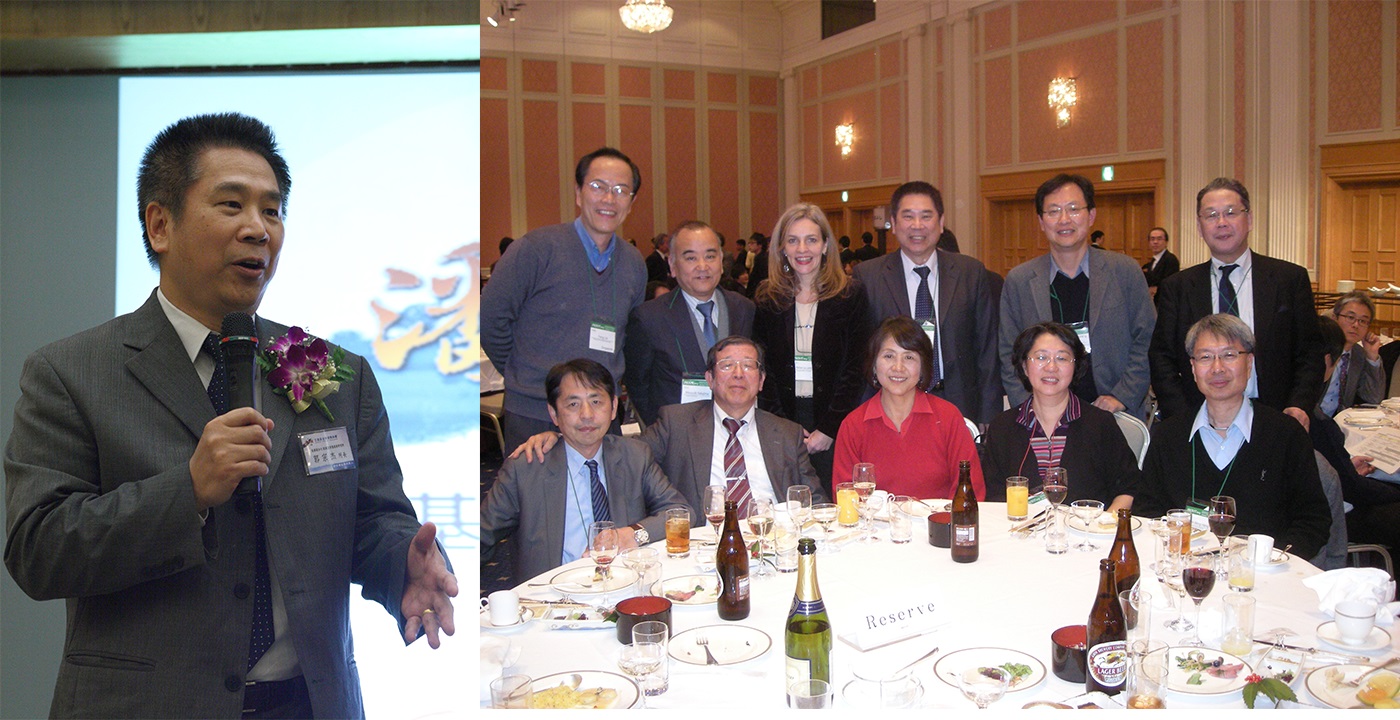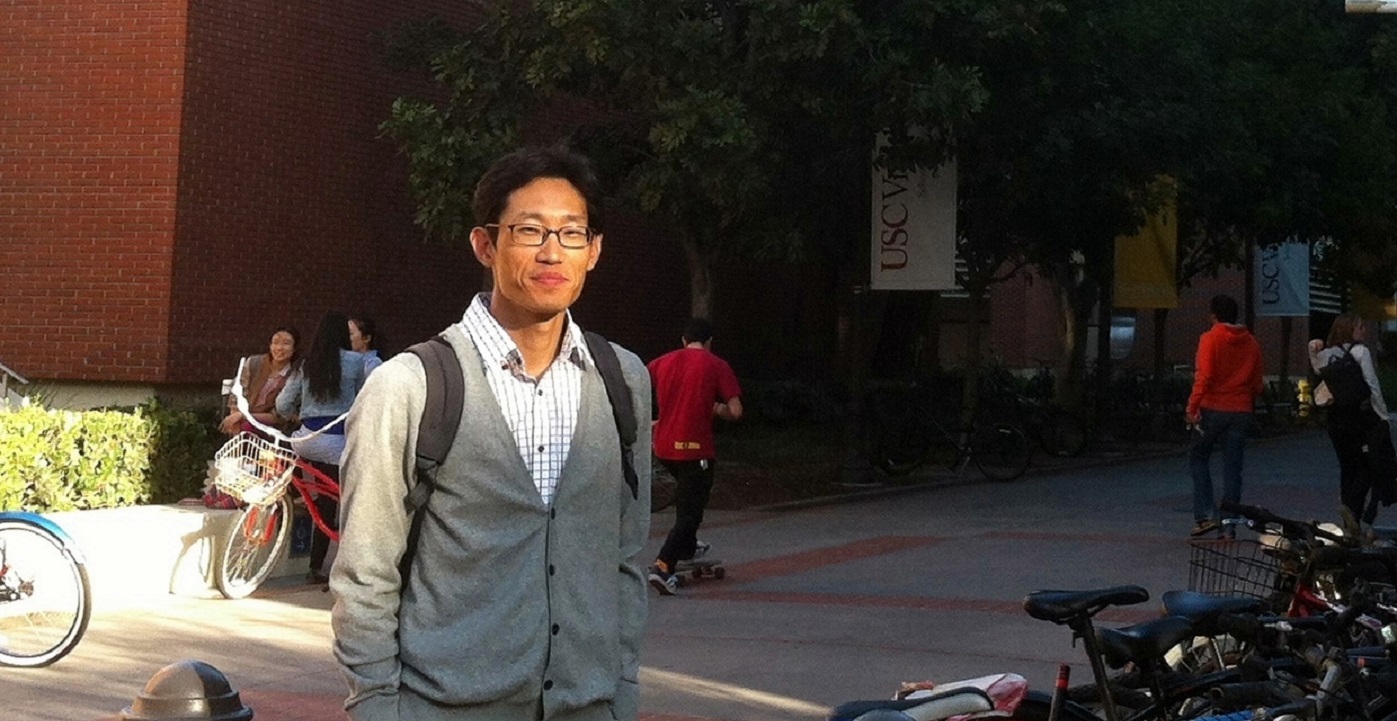

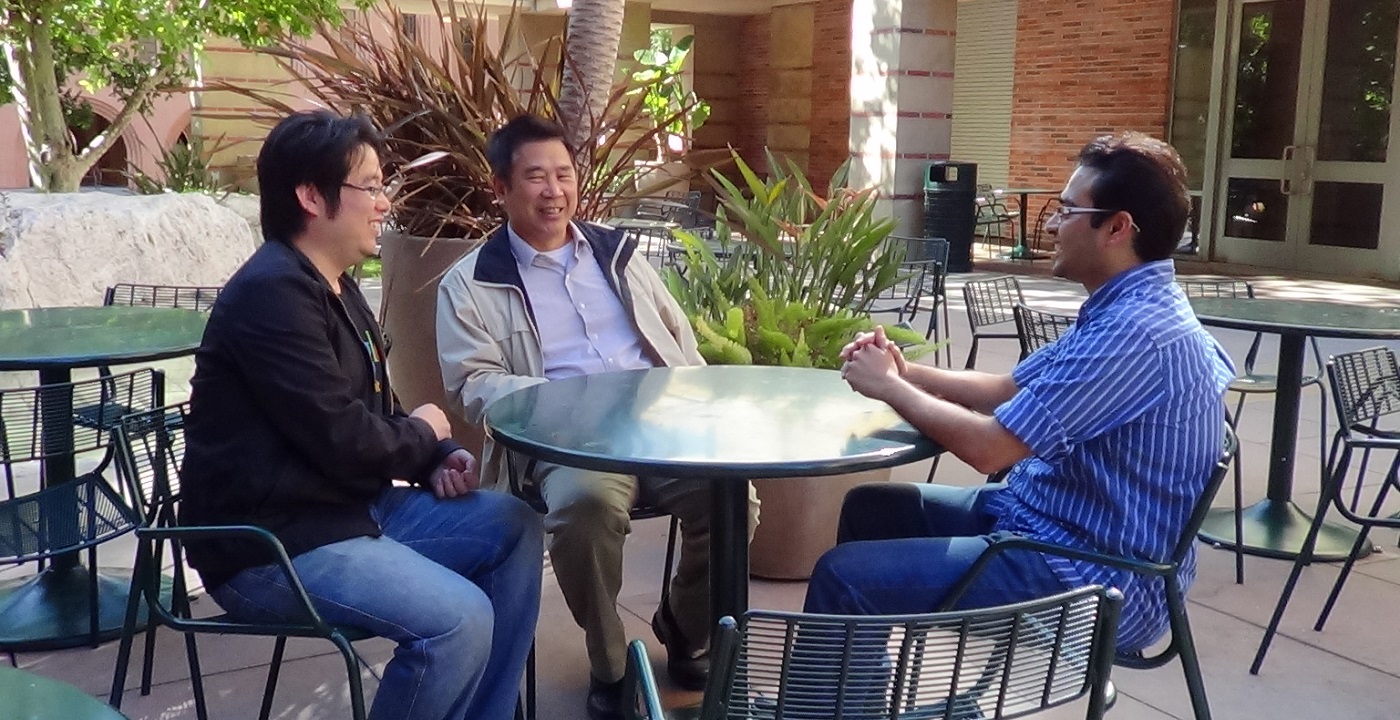
Thanksgiving Lunch 11/28/2013
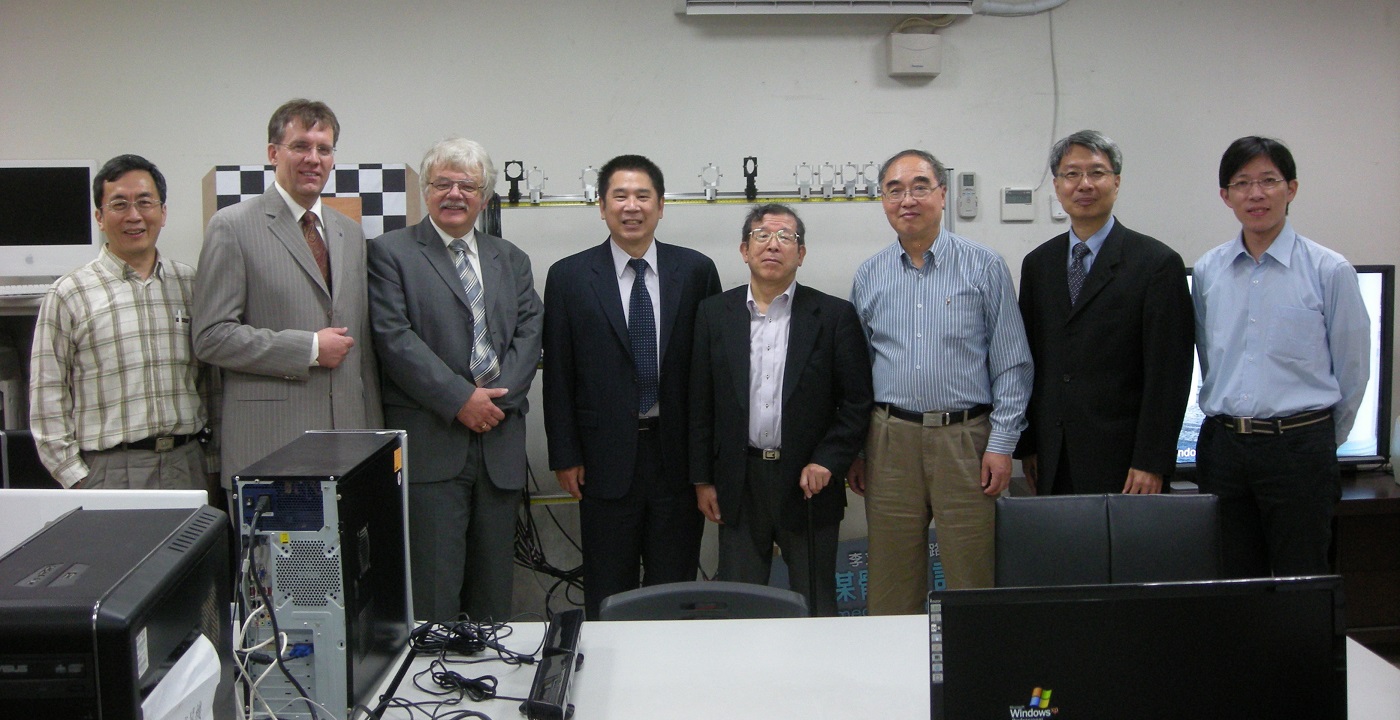
The Media Communications Lab had a wonderful Thanksgiving lunch together as a big family. We shared a very happy time.
The Multimedia Communication Lab actively participated in Discover USC, an open house held for prospective students on November 24th. As one of the largest programs, MCL lab tour aimed at explaining our research and achievements to prospective students who might be interested. To make the tour more fascinating and easy to understand, interesting special effects filter, face warping videos, super resolution images, as well as 3D images and video clips were demonstrated. Many parents and students showed great interests in our research topics and asked a lot of questions during the tour.
Wireless physical layer secrecy has attracted much attention in recent years due to the broadcast nature of the wireless medium and its inherent vulnerability to eavesdropping. This book introduces various signal processing approaches to enhance physical layer secrecy in multi-antenna wireless systems. It focuses specifically on the signal processing aspects, including beamforming and precoding techniques for data transmission and discriminatory training schemes for channel estimation. [expand title=”Read More…” swaptitle=”See Less…”] The content can be roughly divided into three parts: (i) data transmission, (ii) channel estimation and (iii) advanced applications. Even though many works exist in the literature on these topics, the approaches and perspectives taken were largely diverse. The discussions will cover cases with collocated and distributed antennas, i.e., relays. This book will also review recent works that apply these signal processing approaches to more advanced wireless systems, such as OFDM systems, multicell systems, cognitive radio, multihop networks etc. This book will allow readers to gain basic understanding of works on physical layer secrecy, knowledge of how signal processing techniques can be applied to this area, and the application of these techniques in advanced wireless applications. The authors hope to provide a more organized and systematic view of these designs and to lay a solid foundation for future work in these areas. By presenting the work from a signal processing perspective, this book should trigger more research interest from the signal processing community and further advance the field of physical layer secrecy along the described directions.[/expand]
More information about this book:
Springer
USC Library
The book “Interactive Segmentation Techniques: Algorithms and Performance Evaluation” was published in July, 2013, by Springer Singapore in the series of “SpringerBriefs in Electrical and Computer Engineering / SpringerBriefs in Signal Processing Series”. The authors are Jia He, a PhD student and research assistent at USC, Professor Chang-Su Kim from Korea University, and Professor C.-C. Jay Kuo. The book mainly focuses on interactive image segmentation. It covers the methods which make use of the image features such as colors, edges, contrast, structure, etc., and extract the foreground object information indicated by the users’ interactions, and then provide user-involved segmentation results until the results are acceptable to the users. They also discussed how the existing methods tried to capture users’ desires, improve the segmentation accuracy, accelerate the interaction-process loop, reduce the computation complexity and thus generate reasonable results. Different methodologies may have strengths on particular images. For a particular segmentation task, user can choose and develop a proper method according to their analysis in the book.[expand title=”Read More…” swaptitle=”See Less…”] “Once we worked on a project to convert the 2D video to 3D, we faced a problem to segment the foreground object out.” Jia says. “Since for different images, the foreground objects may have different definitions, we have to provide an interactive segmentation tool to that task. We did a lot of research work on the interactive image segmentation, and found that there had been so many methodologies on this task, and people were trying to provide a segmentation tool that is much easier to control and is more efficient to obtain user desired results. It is hard to say which method is the best, since this topic is still on the way of research, [...]